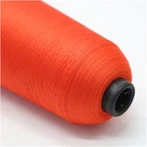
There are two weaving methods: one is to arrange polyester filament (or other filament) on the coarse frame of ordinary spinning machine, the other is to arrange the coarse cotton silk (or short fiber coarse wire) on the speaker port of horizontal device, and then release the coarse cotton wire through the stretching device. After the polyester filament is drawn out, the collector at the back of the front roller is directly combined with the extracted cotton fiber to twist and spin the core yarn. The second method is to feed two long wires behind the front leather roller and twist the yarn into core yarn by using an extended cotton swab. This weaving method is called modified core yarn or false core yarn. Another way of weaving is to grow two filaments on both sides of the cotton strip, which increases the adhesion between short fiber and filament, reduces the use of a filament on the surface of the yarn, while polyester filament grows in the middle of the yarn, so the adhesion of cotton fiber to filament is small, and "skin" phenomenon appears in the weaving process. But in mass production, the first method is generally used. The fiber is easy to make the core yarn with more cotton, the fabric is comfortable to wear, while the fiber is easy to make the fine core yarn, while the false core yarn is the opposite.
When weaving core spun yarn with polyurethane elastic yarn, a pair of feeding rollers are installed at the wire outlet of upper coarse frame, and the surface speed of the roller is lower than that of the front roller. The core yarn is stretched first, and the elongation is controlled, and then the human and short filaments are folded and twisted into the core yarn.